Daniel C. Andersson
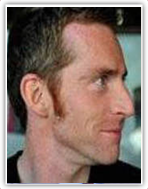
Daniel C. Andersson gained his PhD at the Warburg Institute, and held a Research Fellowship at Wolfson College, Oxford. He is a scholar of the cultural, intellectual, religious and literary life of early modern Europe, working chiefly on Francis Bacon, Philology, Aristotelianism and Calvinism. Recently, he has examined Calvinist notions of the care of the soul in Ames, Perkins and Abernethy, as well as the Habsburg reception, above all in Hungarran, of these authors. These are the chief strands of his current interests in early modern history, with philology, exchange, Calvin, Aristotle being the chief tufts in the ‘thought-cloud’.
David Colclough (Queen Mary University of London)
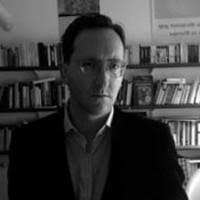
David Colclough is Professor of Renaissance Studies at Queen Mary University of London. His edition of New Atlantis was published in 2025 as vol. XIX of the Oxford Francis Bacon. Beyond Bacon, his current research primarily focuses on John Donne, whose Sermons at the Court of Charles I he edited as volume 3 of The Oxford Edition of the Sermons of John Donne (Oxford UP, 2013); he is now preparing volume 14 (Sermons Preached at St Paul’s Cathedral, 1628-1630). He is the author of the ODNB life of Donne, and the editor of John Donne’s Professional Lives (D.S. Brewer, 2003). His monograph Freedom of Speech in Early Stuart England was published by Cambridge UP in 2005.
David Foster (University College London)

David Foster is an Associate Professor in Law at University College London. He is an expert in English legal history, with a particular specialism in records and manuscripts relating to the Court of Chancery in the seventeenth century. He has published widely on the history of Chancery and equity, including a recent edited collection (Essays on the History of Equity, Hart Publishing, 2026).
Dana Jalobeanu (University of Bucharest/University of Technology, Nuremberg)

Dana Jalobeanu is Professor of Philosophy at the University of Bucharest, and since 2025 Professor of Early Modern Philosophy at the University of Technology, Nuremberg. Trained in theoretical physics and philosophy, she has a PhD in Epistemology and Philosophy of Science (2000) and Habilitation in Philosophy (History and Philosophy of Science) from the University of Bucharest. Jalobenau is the co-founder of the Princeton-Bucharest Seminar in Early Modern Philosophy, co-editor of the Journal of Early Modern Studies, and president of the European Society for History of Science (since 2020). In addition to many articles, she is author of The Art of Experimental Natural History: Francis Bacon in Context (Zeta Books, 2015) and Spectacolul filosofiei. Cum să citim Scrisorile lui Seneca (The Theatre of Philosophy: How to read Seneca’s Letters) (Humanitas, 2022), and co-editor of Francis Bacon on motion and power (Springer, 2016), Cambridge History of Philosophy of the Scientific Revolution (Cambridge UP, 2022), and Encyclopedia of Early Modern Philosophy and the Sciences (Springer, 2022). She is translating and editing the works of Francis Bacon for the Romanian edition (Humanitas, 2011, 2013, 2022) and editing vol. XVIII, Sylva sylvarum, for the Oxford Francis Bacon. Personal website.
K. J. Kesselring (Dalhousie University)
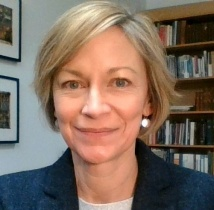
K.J. Kesselring is Professor of History at Dalhousie University (Halifax, Canada). She has previously published works on early modern English law, crime, and politics, with monographs on the royal pardon, the Northern Rebellion of 1569, and homicide. She also co-authored, with Tim Stretton, Marriage,Separation and Divorce in England, 1500-1700 (Oxford University Press, 2022). She has edited or co-edited several volumes of essays, including with Natalie Mears: Star Chamber Matters: An Early Modern Court and its Records (University of London Press, 2021). She sits on the editorial board for the book series Cambridge Studies in Early Modern British History and has an extensive record of service to the profession. She has had visiting fellowships at Durham University; All Souls College, Oxford; and Robinson College, Cambridge. She is also a Fellow of the Royal Society of Canada.
Michael Kiernan (Pennsylvania State University, emeritus)
Michael Kiernan received his doctorate from Harvard University where he was Resident Tutor at Mather House. An Associate Professor of English Emeritus at Penn State University (University Park), he has taught Shakespeare and Renaissance/early modern literature. Professor Kiernan has edited three volumes for the Oxford Francis Bacon. His 1985 edition of The essayes or counsels, civill and morall, jointly published by Harvard University Press and Oxford University Press, was adopted in 2000 as vol. XV of the OFB. In 2000, he published volume IV, The advancement of learning. His edition of The Historie of the raigne of King Henry the seventh and other works of the 1620s (vol. VIII) was published in 2012. Research for these volumes was supported by grants from the American Philosophical Society, the American Council of Learned Societies, the Folger Shakespeare Library, the Henry E. Huntington Library, the British Academy, and Penn State.
Rhodri Lewis (Princeton University)

After spending 23 years at the University of Oxford, Rhodri Lewis moved permanently to Princeton in 2018. His interests lie principally in the literary, cultural, and intellectual histories of the long sixteenth and seventeenth centuries, but he has published on authors and topics ranging from classical antiquity to the present day. His books include: Language, Mind and Nature: Artificial Languages in England from Bacon to Locke (Cambridge UP, 2007); William Petty on the Order of Nature: An Unpublished Manuscript Treatise (Medieval and Renaissance Texts and Studies, 2012); Hamlet and the Vision of Darkness (Princeton UP, 2017); and Shakespeare’s Tragic Art (Princeton UP, 2024). At present, he is at work on a life of the great literary critic Frank Kermode. Once this is finished, he will be returning to early modernity — to an edition of Francis Bacon’s De sapientia veterum (Wisdom of the Ancients) for OFB, vol. V, and to King Lear. His research has been supported by grants and fellowships from institutions including the Leverhulme Trust, the Mellon Foundation, the British Academy, the Huntington Library, and the Institute for Advanced Study in Princeton, and he was a 2025-26 Guggenheim Fellow.
Noah Millstone (University of Birmingham)
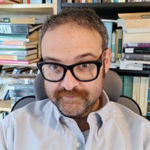
Noah Millstone is Associate Professor of Early Modern History at the University of Birmingham, having held positions at Harvard and Bristol, and fellowships at the Warburg Institute and the Institute of Advanced Studies at Princeton. He is the author of Manuscript Circulation and the Invention of Politics in Early Stuart England (Cambridge University Press, 2016), and oversaw the internet database Manuscript Pamphleteering in Early Stuart England (web resource: http:/mpese.ac.uk), funded by an AHRC Early Career Research Grant. His forthcoming publications include Book Talk in Early Modern Europe (Princeton University Press, 2027) and the collection The Short Peace: Europe Between the Wars, 1595-1620 (Boydell & Brewer, 2027), linked to a project for which he received an AHRC Research Networking Grant and a BA/Leverhulme Small Grant. He is Director of Birmingham’s Centre for Reformation & Early Modern History, convenor of the Institute of Historical Research’s Tudor-Stuart History Seminar, and a Fellow of the Royal Historical Society.
Richard Serjeantson (Trinity College, Cambridge)

Richard Serjeantson is editing Volume III and VI of the OFB in collaboration with Angus Vine. He has published a number of studies of Bacon’s life and writings arising broadly from this work, including (with Thomas Woolford) ‘The Scribal Publication of a Printed Book’, The Library, 7th ser., 10 (2009) 119-56 and ‘Francis Bacon and the Late Renaissance Politics of Learning’, in For the Sake of Learning, ed. Ann Blair and Anja Goeing (Brill, 2016), pp. 195–211. His edition of Valerius Terminus of the Interpretation of Nature will appear in Volume V of the OFB; a preparatory study of that work appeared as ‘Francis Bacon’s Valerius Terminus and the Voyage to the “Great Instauration”’, JHI, 78 (2017), 341–68. With Michael Edwards he has also published an edition of what is now the earliest known treatise by a different early modern philosopher: René Descartes, Regulae ad directionem ingenii: An Early Manuscript Version (Oxford UP, 2023).
Alan Stewart (Columbia University), Director

Alan Stewart is Professor of English and Comparative Literature at Columbia University. He is the author of several books, including Hostage to fortune: the troubled life of Francis Bacon 1561-1626 , which he co-wrote with Lisa Jardine. He first joined the Oxford Francis Bacon as a graduate student in 1992 as an MHRA Research Associate undertaking research for founding editor Graham Rees. He edited OFB I, Early Writings, 1584-1596, with Harriet Knight (2012), and is now completing OFB II, Late Elizabethan Writings, 1596-1602. Since 2019, he has been Director of the Oxford Francis Bacon.
Angus Vine, FSA, FRHistS (University of Stirling)

Angus Vine is Professor of English Studies at the University of Stirling. He is the author of three books, In Defiance of Time: Antiquarian Writing in Early Modern England (Oxford UP, 2010); Miscellaneous Order: Manuscript Culture and the Early Modern Organisation of Knowledge (Oxford UP, 2019), and Early Modern Merchants and their Books (Oxford UP, 2025). After working as a Research Associate on The Oxford Francis Bacon Project at Cambridge (2005-2008), he is editing Volumes III and VI of the OFB in collaboration with Richard Serjeantson. He has published a number of studies of Bacon’s life and writings arising broadly from this work, including ‘Francis Bacon’s Composition Books’, Transactions of the Cambridge Bibliographical Society, 14 (2008), 1-33; ‘A New Version of Bacon’s Apologie: MS Rawlinson D. 672′, Bodleian Library Record, 21 (2008), 118-37; ‘Commercial Commonplacing: Francis Bacon, the Waste-Book, and the Ledger’, English Manuscript Studies, 1100-1700,16 (2011), 197-218; and ‘”His Lordships First, and Last, Chapleine”: William Rawley and Francis Bacon’, in Chaplains in Early Modern England, eds Hugh Adlington, Tom Lockwood and Gillian Wright (Manchester UP, 2013), pp. 123–140. He is also chair of the British Academy-funded Oxford Francis Bacon Project.
Maria Wakely (Queen Mary University of London, retired)
Maria Wakely worked with Graham Rees on four volumes of the Oxford Francis Bacon (VI, XI, XII, XIII), and established texts for use on vols. IX, X, XVIII and XIX. She is also the co-author, with Rees, of Publishing, politics, and culture: the king’s printers in the reign of James I and VI (Oxford UP, 2009).
Sophie Weeks (University of York)
Sophie Weeks’s research focuses on Francis Bacon. She is currently working on two projects: first, she is completing a book entitled Francis Bacon’s Science of Magic. Offering a novel interpretation of the knowledge-power relationship in Francis Bacon’s ‘Great Instauration’, this study argues that Bacon proposed a science of magic as the very core of his whole programme for the reform of natural knowledge. Sharing certain goals with the occult sciences, Bacon’s project intended the production of novelties and wonders beyond our wildest expectations and dreams. Indeed, there is something appalling, Faustian even, in Bacon’s ambition to conquer nature, including human nature. However, while sharing the goals of the occult sciences and approving their experiential or experimental bias, he scorns the theoretical underpinnings they offer and their lack of methodical perseverance. In fact, Bacon’s science of magic is resolutely anti-occultist. Second, she is editing (with Daniel Andersson, Rhodri Lewis, and Richard Serjeantson) Volume V of the Oxford edition of Francis Bacon’s works, which comprises Bacon’s early philosophical writings to about 1611.
Ian Williams (St John’s College, Oxford)

Ian Williams is a fellow and associate professor in law at St John’s College and the Faculty of Law. Before joining the Faculty he was an associate professor in law at University College London. Ian’s research interests are centred on English legal history. He is the editor of the Journal of Legal History and his research was awarded the David Yale prize for an outstanding contribution to the history of the law of England and Wales. Most of his research concerns the early-modern period (sixteenth and seventeenth centuries), although he has published on topics from the late-thirteenth century onwards. He is particularly interested in the interaction between legal practice and more theoretical ideas of law and norms, as well as the communication of law (mostly, but not only, through printed and manuscript texts). At present his work focuses on the court of Star Chamber, for which he is editing a volume of seventeenth century law reports and working on a project about the theory and practice of the court as a provider of criminal equity.
Samuel Garrett Zeitlin (University College London)

Samuel Garrett Zeitlin is University Lecturer in Modern Intellectual History at University College London. He gained his PhD, on ‘War and Peace in the Political Thought of Francis Bacon’, from the University of California-Berkeley in 2018. He has published on Bacon’s political thought and writings on war and empire in History of Political Thought, History of European Ideas, The Review of Politics, Political Research Quarterly and Global Intellectual History, as well as in the recent volume, Reframing Treaties in the Late Medieval and Early Modern West (Oxford, 2025). Dr |Zeitlin has also done editorial and translation work on the political thought of Raymond Aron for the volume Liberty and Equality (Princeton, 2023) and on Carl Schmitt, most recently in Schmitt’s Early Legal-Theoretical Writings (Cambridge, 2021), and Schmitt’s history of the First World War, State Composition and Collapse (Polity, 2025).
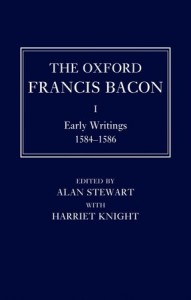 The Oxford Francis Bacon I: Early Writings 1584-1596, ed. by Alan Stewart with Harriet Knight (Oxford University Press, 2012), pp. 1,136. ISBN: 978-0-19-818313-6.